Skip to content

JOBUZO

  • News
  • Indonesia
  • Toggle search form
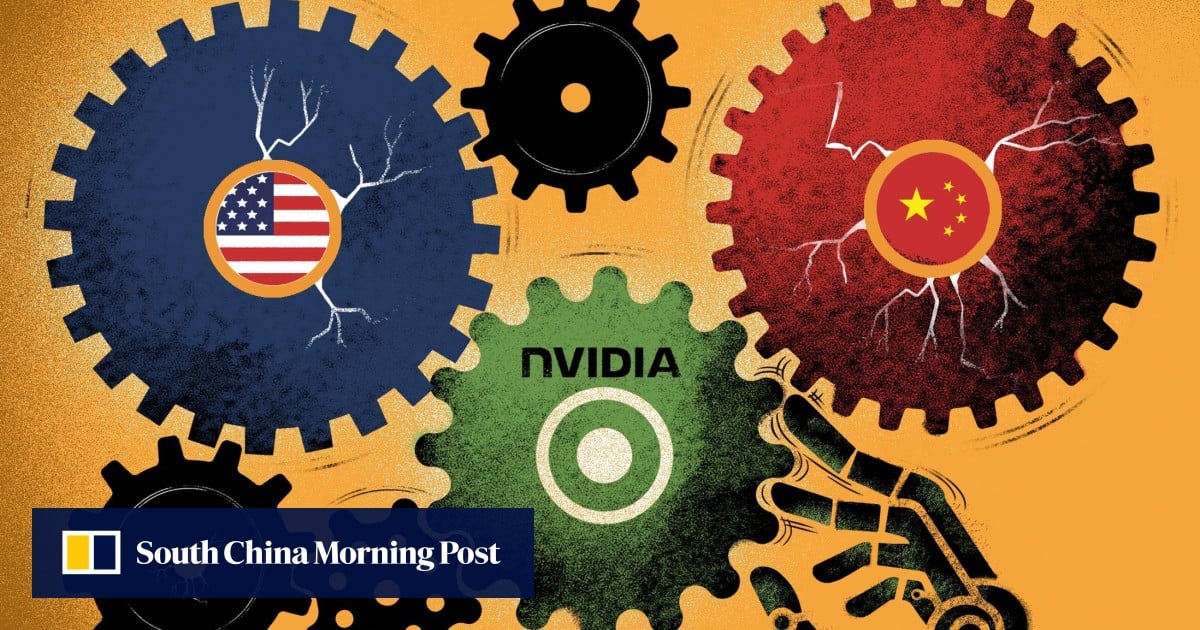
Competition or ‘co-opetition’: how is convergence shaping Sino-US AI race?

Competition or ‘co-opetition’: how is convergence shaping Sino-US AI race?

Posted on 4 April 2026 By jobuzo

There was a surprise guest speaker at Nvidia’s widely watched GPU Technology Conference (GTC) in San Jose, California, last month: Yang Zhilin, the founder of Beijing-based Moonshot AI, the developer behind the Kimi family of foundational artificial intelligence models.

Amid heated rhetoric about US-China AI competition, which some have likened to an “arms race”, the participation of a Chinese AI start-up’s CEO at the flagship event of American chipmaking giant Nvidia might have struck some as odd.

Yang, a 30-something doctoral graduate of Pittsburgh’s Carnegie Mellon University from Shantou, Guangdong province, delivered an almost identical presentation less than two weeks later at China’s state-backed Zhongguancun Forum in Beijing, where attendees included Beijing Mayor Yin Yong and Ding Xuexiang, a member of the Politburo Standing Committee – the Communist Party’s highest decision-making body.

Advertisement

Kyle Chan, a fellow at the Washington-based Brookings Institution think tank, said it was the latest example of new forms of convergence emerging between the AI ecosystems in the United States and China, even as geopolitical tensions tried to pull them apart.

“There’s many different cross-cutting factors and interests that are pulling in either direction,” he said. “Even among the US companies themselves, they have very different perspectives and views on Chinese AI and competition.”

News :<div>12 weeks' jail for school IT support technician who took upskirt videos of teachers</div>

Advertisement

Nvidia was a key driver of convergence as it stood to be its biggest beneficiary, Chan said. The company, the world’s leading designer of advanced semiconductor chips – the core hardware powering the global AI industry – announced at GTC a revenue outlook of at least US$1 trillion through to 2027, driven by exploding demand for its most advanced Blackwell and Rubin chips.

Notably, the forecast did not include revenue from any potential sales of the advanced chips in the Chinese market. Since 2022, US export controls have restricted Nvidia from selling its most advanced chips in China, despite surging demand from Chinese tech giants.

Competition or ‘co-opetition’: how is convergence shaping Sino-US AI race?


News

Post navigation

Previous Post: White House seeks 1.5 trillion USD in defense spending in 2027 budget proposal
Next Post: Lucid blames dip in Q1 sales on seat supplier issue

Related Posts

Canon unveils a Limited Edition version of its popular G7 X III compact camera Canon unveils a Limited Edition version of its popular G7 X III compact camera News
Desperate Housewives Alum Marcia Cross Shares Rare Selfie Desperate Housewives Alum Marcia Cross Shares Rare Selfie News
Trump’s Greenland gambit tests Europe’s patience and power Trump’s Greenland gambit tests Europe’s patience and power News

Latest

  • Sherpa believed to be dead crawls back to Everest Base Camp after nearly a week missing
  • Australian cockroach kingpin caught with 100,000 illegal insects in record bug bust
  • Charli XCX, Joe Alwyn & More Celebs at Dua Lipa, Callum Turner’s Lavish Italian Wedding Party
  • What does Washington’s latest AI chip guidance mean for Chinese tech firms?
  • What is behind EU’s new migration push?
  • India’s ‘Cockroach Janta Party’ founder returns to face off against Modi govt in Delhi streets, with its 22 million Instagram followers
  • ‘Live in the real world’: Iranian FM reacts to Trump’s willingness to meet Supreme Leader Mojtaba Khamenei
  • Senate passes $70 bil immigration bill after rejecting efforts to permanently ban Trump’s settlement fund
  • US military says drones and missiles launched by Iran were intercepted
  • S’porean linked to Cambodia scam syndicate arrested in M’sia & deported to S’pore, will be charged

Copyright © 2025 JOBUZO. Disclaimers | Privacy Policies

Powered by PressBook Masonry Blogs