
by Xinhua writers Wang Yue, Shi Yu
NAIROBI, July 23 (Xinhua) — Over two months, the fastest-in-the-world Ebola outbreak in the Democratic Republic of the Congo (DRC) has left more than 1,000 dead.
The epidemic has become the third-largest ever documented globally — a marker that understates the danger. The two larger outbreaks, in West Africa in 2014-2016 and in eastern DRC in 2018-2020, each unfolded over roughly two years. This time it has scaled up rapidly in weeks.
The tempo of spread is never faced. The 2018-2020 outbreak in eastern DRC took more than 10 months to reach 2,000 confirmed cases, but this time it took only two months. In recent days, the country has recorded almost 80 confirmed cases in a single day, and at one point 37 deaths in 24 hours.
“We’ve seen the fastest growth in a single month since the outbreak started, and of all the Ebola outbreaks that we have managed,” said Chikwe Ihekweazu, executive director of the World Health Organization (WHO) Health Emergencies Programme. The Africa Centers for Disease Control and Prevention (Africa CDC) called it the fastest-growing the continent has seen.
As of Monday, the country had reported 2,473 confirmed cases and 999 deaths, while Uganda recorded two deaths, bringing the total toll to 1,001. The Ituri province, the epicenter, accounts for over 90 percent of cases and 80 percent of deaths, with the WHO reporting over 100 infections among health workers, including at least 36 fatalities.
What has made this outbreak hard to contain is not the speed alone, but also the way a pathogen the world is poorly prepared to fight has collided with a landscape that frustrates almost every step of the response.
WORSE SITUATION
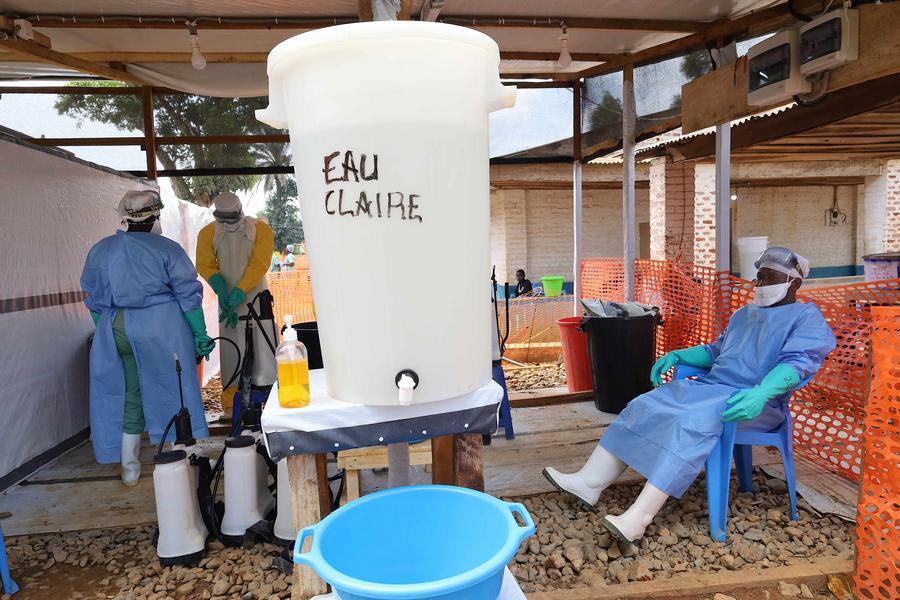
What distinguishes this outbreak is the strain behind it. Declared on May 15 — the DRC’s 17th outbreak since the virus was first identified in 1976 — the epidemic is caused by the Bundibugyo strain, a severe and often fatal form of Ebola for which there are currently no approved vaccines or specific treatments.
The tools that helped bend the curve of recent Ebola crises — the Ervebo vaccine and monoclonal-antibody therapies credited with saving lives during the 2018-2020 outbreak in eastern DRC — were developed against the Zaire strain.
They do not apply in this outbreak. In effect, medical experts are confronting the current epidemic with much of the pharmaceutical arsenal of a decade ago, relying on early detection, rapid referral and supportive care rather than effective vaccines and drugs.
The clinical picture compounds the problem. Health officials say the disease in this outbreak often begins with flu-like symptoms, including fever, which can be mistaken for malaria or other common illnesses, obscuring its true nature and delaying diagnosis at precisely the point when early isolation matters most.
If the biology is unfavorable, the epidemiology is more troubling still, as the response is chasing a picture it cannot fully see.
At a UN briefing in Geneva on July 14, Ihekweazu warned that “80 percent of new cases are outside our contact lists and so are coming to us from unknown chains of transmission.” WHO’s modelling indicates that its scale could be “at least two to four times” the number of reported cases.
That assessment is reinforced by where people are dying. In a briefing on July 17, International Organization for Migration (IOM) Regional Director Frantz Celestin said nearly 66 percent of reported deaths occurred in communities rather than health facilities, highlighting persistent challenges in early detection, surveillance and timely access to treatment.
POORER RESPONSE
The conventional response to Ebola — isolate the sick, trace their contacts, bury the dead safely — assumes a degree of stillness. Eastern DRC offers the opposite.
The virus is spreading through provinces marked by armed conflict, repeated displacement, artisanal mining and constant traffic between cities, villages, mining camps and neighboring countries.
IOM crisis manager Andrew Mbala said the organization had documented bodies being moved through internal checkpoints, some of which tested positive for Ebola. The funeral customs and mobility together carry the virus faster than teams can follow.
The organization is boosting its health surveillance across the 110 Points of Entry (PoE), and 43 additional health screening points along major routes, with surge personnel deployed to high-risk border areas, IOM said in a press release in June.
The organization is also strengthening preparedness in at-risk countries including Burundi, Ethiopia, Kenya, Rwanda, South Sudan, Tanzania and Zambia, among others, by enhancing surveillance systems at PoE and mapping high-risk travel routes and areas of congregation, it added.
WHO has, for its part, admitted that a single strategy cannot fit such terrain. In a press conference on Tuesday, WHO incident manager Thierno Balde said that the agency now sees three distinct patterns — high-intensity transmission, newly emerging areas, and places beginning to stabilize — and is tailoring its response to each.
Mongbwalu, where the outbreak was first detected, is currently showing some signs of stabilization, with a similar trend in Goma, capital of the North Kivu province; In Kisangani, capital of Tshopo province, all five cases had been imported from Ituri with no secondary cases yet detected, according to Balde.
“We’ll also be working on a new project which aims to reinforce control measures through the River Congo, a crucial transit route requiring our attention for rapid implementation of control measures,” said Balde. “But let’s be very clear, this outbreak remains ahead of us and we are still in the phase of catching up.”
A lesson from the DRC’s 2018-2020 outbreak was that Ebola is fought on two fronts — the medical and the social — and that losing the second can undo the first. That lesson is being relearned.
Pierre Akilimali, an incident manager with the DRC National Institute of Public Health, said four Ebola treatment centers in Ituri had been attacked since the outbreak was declared. “These incidents have disrupted patient care and exposed health workers and our partners to serious security risks,” he said.
Ihekweazu from the WHO said attacks on treatment centers and resistance to health teams could be reduced only through greater openness and transparency with affected communities.
“Before any new center is opened, we invite leaders of the community to see what is being done” and to speak with the health care providers who have left their homes to support the response, he said.
TIGHTER RACE
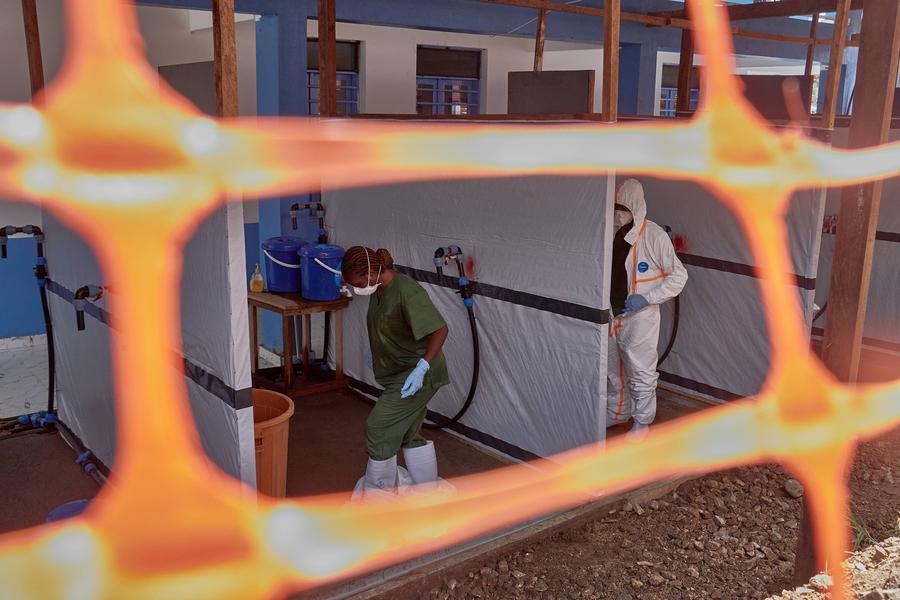
Despite growing international efforts, the response continues to lag behind the rapidly expanding outbreak.
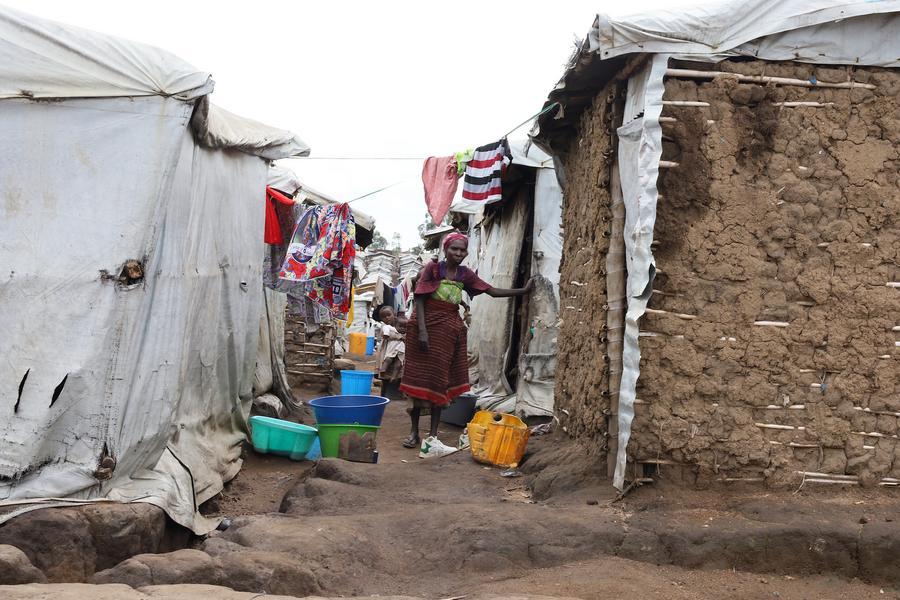
The strain is visible. UN humanitarian officials reported confirmed cases in at least 16 displacement sites in Ituri, home to more than 270,000 people, where overcrowding and inadequate water and sanitation services heighten transmission risks. They also warned that available resources fall far short of what is needed.
International support is expanding. On Monday, the African Development Bank Group announced that it has approved grants worth 13 million U.S. dollars to enhance national emergency responses to the Ebola outbreak and strengthen efforts to arrest its spread in the DRC, South Sudan and Uganda.
In late June, the WHO Regional Office for Africa and the Africa CDC, together with the Ministry of Health of Uganda and partners, officially launched a centralized coordination platform to strengthen Africa’s capacity to prepare for, coordinate and respond to public health emergencies.
At the invitation of the platform, known as the Joint Africa CDC-WHO AFRO Continental Incident Management Support Team, two Chinese experts joined the effort in mid-July, working on outbreak analysis, cross-border risk assessment and laboratory coordination.
China has also sent two batches of medical experts to the DRC, providing technical exchanges and support in epidemiological investigation, laboratory testing, case treatment, infection prevention and control and personnel training.
But these efforts are not enough. At an African Union health summit on Tuesday in Accra, Ghana’s capital, Africa CDC Director-General Jean Kaseya called for stronger political commitment, sustainable financing, resilient health systems and African-led emergency response.
Funding needs for the Ebola response have surged from an estimated 518 million U.S. dollars in June to 1.4 billion dollars, underscoring the escalating scale of the outbreak, he said.
There is a longer-term answer taking shape. Research institutions have begun testing a candidate vaccine against the Bundibugyo strain behind this outbreak, while the DRC’s National Institute for Biomedical Research is helping evaluate experimental treatments.
But with a vaccine still in early-stage trials, the outbreak will be won or lost with the tools already at hand. That is the stark reality behind Kaseya’s warning: science is racing to catch up with a virus that is already several steps ahead.
“If we do not stop this outbreak today, it could become one of the worst Ebola outbreaks the world has ever documented,” he said. ■
World Insights: Fastest-ever Ebola outbreak tests global health response


