
JERUSALEM, July 25 (Xinhua) — Amid persistent tensions in the Middle East, the United States and Saudi Arabia announced this week the signing of a nuclear cooperation agreement covering reactor technology, scientific research, technical training, and investment.
Washington later announced the agreement would be linked to Saudi Arabia’s normalization of relations with Israel under the framework of the Abraham Accords, adding another layer of complexity to the agreement’s regional implications.
Although Israel has welcomed the U.S. arrangement, experts argue that the U.S.-Saudi nuclear deal poses three strategic dilemmas for Israel.
DILEMMA 1: COULD THE DEAL SET OFF REGIONAL NUCLEAR RACE?
The nuclear issue is one of the root causes of instability in the Middle East. Although the U.S.-Saudi agreement is limited to energy cooperation, it has nonetheless raised concerns among regional countries.
According to the details disclosed by Washington, the agreement would establish a long-term U.S.-Saudi partnership for a civilian nuclear program, with U.S. companies expected to build key nuclear infrastructure for Saudi Arabia.
Yoel Guzansky, a senior researcher at Israel’s Institute for National Security Studies, wrote in a post following the announcement of the deal that the central issue is not the use of nuclear energy itself, but the possibility that Saudi Arabia could be granted the right to enrich uranium.
He warned that such a precedent could undermine the “United Arab Emirates model,” which is based on giving up enrichment capabilities, encourage other countries in the region to demand similar rights, and weaken the global non-proliferation regime.
For Israel, which maintains a policy of deliberate ambiguity by refusing to confirm or deny possession of nuclear weapons, preventing a regional nuclear race has long been regarded as one of the key objectives of its foreign policy.
However, if Saudi Arabia develops nuclear capabilities with U.S. support, other countries in the region may well reconsider their own nuclear development policies, which, in turn, could make Israel’s long-standing opposition to regional states’ acquisition of uranium enrichment capabilities increasingly difficult to sustain.
DILEMMA 2: COULD THE DEAL ERODE ISRAEL’S STRATEGIC EDGE?
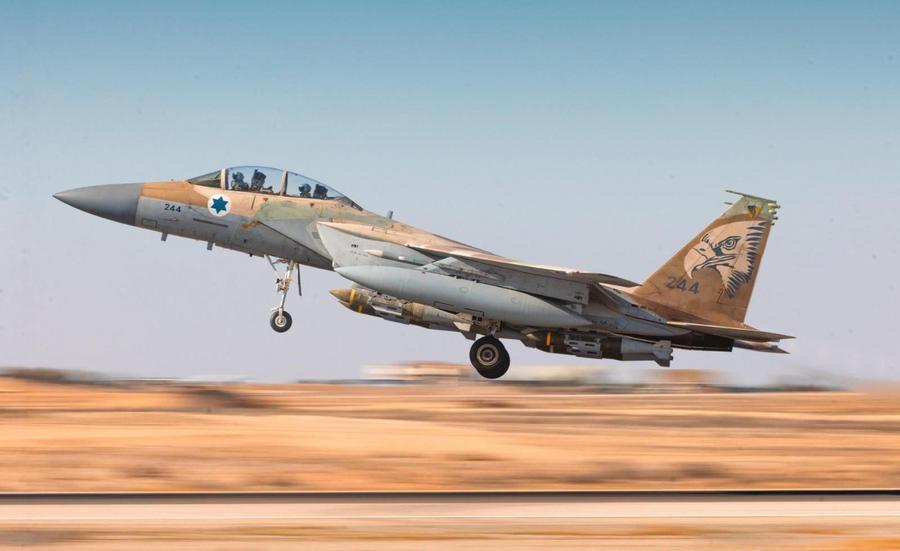
The United States has pledged to preserve Israel’s Qualitative Military Edge, its longstanding commitment to maintaining Israel’s technological and military superiority in the region.
From Israel’s perspective, however, U.S. support for Saudi Arabia’s nuclear energy capabilities could potentially erode this strategic advantage.
The U.S.-Saudi nuclear deal is part of a broader effort by Washington to deepen military partnerships with multiple Middle Eastern states, as the United States considers providing more advanced weapons systems to countries such as Saudi Arabia and Türkiye.
The Israeli daily newspaper Israel Hayom argued in a commentary that Israel’s qualitative advantage in the region is being eroded, as Washington has recently appeared less attentive to Israeli concerns, citing the reported U.S. intention to sell F-35 fighter jets to Türkiye and the U.S.-Saudi nuclear deal as examples.
Previously, in response to the possibility of the United States selling F-35 fighter jets to Türkiye, Israeli Prime Minister Benjamin Netanyahu expressed concern, warning that such a move would “destroy the balance of power in the Middle East.”

DILEMMA 3: COULD THE DEAL PUT PALESTINIAN ISSUE BACK ON AGENDA?
In a bid to address Israel’s concerns, the United States stated later that it would not allow uranium enrichment on Saudi territory and has made the normalization of relations between Saudi Arabia and Israel a prerequisite for implementing the agreement.
Netanyahu quickly welcomed the possibility following the U.S. announcement, as some analysts noted that Israel views a U.S.-Saudi-Israeli partnership as a realignment of regional alliances and a bulwark against Iran and its network of allied groups.
However, Washington’s arrangement could place Israel in a difficult position over the Palestinian issue.
Riyadh has insisted on a clear and irreversible pathway toward a two-state solution to the Palestinian issue before normalizing ties with Israel. Clearly, Washington’s push for Saudi Arabia to establish relations with Israel runs counter to Riyadh’s longstanding diplomatic stance.
Riyadh’s insistence on a pathway toward a two-state solution means that the agreement could also place additional pressure on Israel’s longstanding position regarding the Palestinian issue.
As the Israeli daily Haaretz noted, linking the U.S.-Saudi nuclear deal to the Abraham Accords could bring the Palestinian issue back to the forefront, reviving calls for progress toward a political solution and the establishment of a Palestinian state, which Netanyahu’s government firmly rejects.■
News Analysis: 3 dilemmas U.S.-Saudi nuclear deal poses for Israel


