
This year’s Shangri-La Dialogue draws greater attention to China’s vision of common, comprehensive, cooperative and sustainable security as an alternative approach to addressing mounting security challenges worldwide.
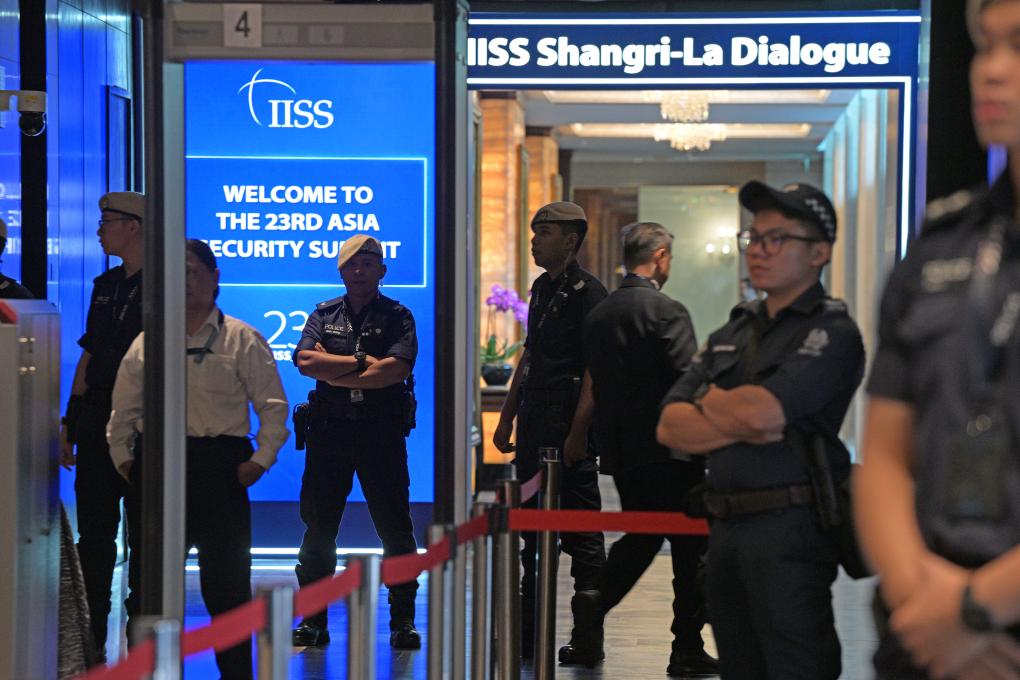
SINGAPORE, June 1 (Xinhua) — The Shangri-La Dialogue 2026, Asia’s premier defense and security summit, concluded in Singapore on Sunday amid intensifying geopolitical tensions, expanding military activities and growing security uncertainties in the world.
Discussions at the three-day summit underscored mounting concerns that the expansion of bloc-based security arrangements and external interference are undermining regional stability and deepening strategic mistrust.
At the same time, many participants emphasized the importance of centrality and dialogue among members of the Association of Southeast Asian Nations (ASEAN) in maintaining regional peace and stability.
In this context, China’s vision of common, comprehensive, cooperative and sustainable security, as outlined in the Global Security Initiative (GSI), has drawn growing attention from regional experts and observers as an alternative approach to addressing mounting security challenges.
JAPAN’S MILITARY SHIFT DRAWS SCRUTINY
At the dialogue on Sunday, Japanese Defense Minister Shinjiro Koizumi claimed that Japan would further expand cooperation with regional countries in defense equipment and military technology, drawing renewed concerns about Tokyo’s ongoing military buildup and expanding security footprint.
Koizumi’s speech came as Japan continues to accelerate a major shift in its post-war security posture through increased defense spending and the relaxation of restrictions on arms exports.
Observers noted that Tokyo’s latest move has fueled concerns among regional countries that Japan is moving further away from its long-held pacifist orientation and toward a more assertive military role.
Japan’s accelerating military buildup deserves scrutiny from its regional neighbors and the broader international community, said Eng Kok Thay, a secretary of state of Cambodia’s Council of Ministers.
These moves could accelerate Japan’s military expansion, increase tensions in the Asia-Pacific, and provoke an arms race that threatens regional stability, he warned.
Kiyoshi Sugawa, senior research fellow at the East Asian Community Institute of Japan, said that by allowing greater flexibility in arms exports, including potential exports to countries involved in conflicts, Japan risks abandoning the image it has cultivated as a peaceful nation since the end of World War II.
“SMALL-CIRCLE” DIPLOMACY FUELS TENSIONS
Also at the dialogue, Philippine Defense Secretary Gilberto Teodoro framed the Philippines as a “guardian of the freedom of the seas,” touting its expanding maritime security cooperation with multiple partners.
However, analysts noted that Manila’s latest moves reflect a broader pattern of bloc-based security arrangements that is reshaping the regional security landscape.
The Philippines and Japan have deepened their security collusion, while doubling down on exclusionary “small-circle” diplomacy.
The Philippines is also seeking external forces to embolden itself in its infringements and provocations in the South China Sea, while attempting to shift blame onto China.
The fundamental reason why the Philippines has been able to continue its provocations is that it is “backed by powerful supporters,” including the United States and Japan, said Salawati Binti Mat Basir, a legal advisor at the National University of Malaysia.
The growing reliance on military intervention and unilateral actions is eroding confidence in the UN-centered international order, international law, and multilateral mechanisms, said Tang Shi Xuan, a researcher at the Huayan Policy Institute under the Malaysia-based think tank Center for Malaysian Chinese Studies.
A PILLAR OF REGIONAL STABILITY
Amid growing security concerns, some regional leaders at the dialogue have called for a broader vision of security centered on development and cooperation.
In a speech at the dialogue, Vietnamese President To Lam said that sustainable security cannot rely on military expansion or arms competition, but must be grounded in development, connectivity and cooperative frameworks.
He further underscored ASEAN’s responsibility to ensure that regional competition does not escalate into confrontation.
ASEAN Secretary-General Kao Kim Hourn highlighted the bloc’s role as a stabilizing force and its continued efforts to promote dialogue, cooperation and a rules-based regional architecture.
He also stressed its commitment to upholding ASEAN centrality and unity, fostering inclusive cooperation and strengthening regional resilience.
Jose Ramos-Horta, Timor-Leste’s president, depicted ASEAN as a successful model of regional cooperation, saying the bloc’s experience shows that sustained diplomacy, consensus-building and practical cooperation can help prevent conflict, strengthen interdependence and promote lasting peace.
Disputes should be resolved through dialogue and regional mechanisms, not external interference, said Virdika Rizky Utama, executive director of the Jakarta-based think tank PARA Syndicate. By reinforcing ASEAN centrality, regional countries can preserve stability and autonomy, he said.
A VISION PRIORITIZES COOPERATION
Amid rising security challenges, the China-proposed GSI has gained growing support from international observers as an effective response to rising global instability at the event.
The China-proposed GSI and the Global Governance Initiative offer Chinese wisdom and Chinese solutions for the international community in responding to global challenges, said Meng Xiangqing, head of the Chinese People’s Liberation Army expert delegation and a professor at China’s National Defense University.
The initiatives uphold multilateralism and the rule of law in international affairs, providing important ideas and solutions for addressing global challenges, he said.
U.S. Defense Secretary Pete Hegseth said a new vision of building a constructive U.S.-China relationship of strategic stability, as agreed by the two heads of state during their recent summit in Beijing, is “meaningful for the history of peace in the region and the world.”
The new positioning for U.S.-China ties is real, substantive, and meaningful for the history of peace in the region and the world, he said while responding to a question from a member of the Chinese delegation at the dialogue.
Meanwhile, experts from regional countries agreed that the GSI is gaining increasing relevance amid global turbulence.
China’s consistent call for common, comprehensive, cooperative and sustainable security under the GSI offers a constructive alternative framework to the bloc-based alliance that is currently driving regional tensions, said Kok Thay.
The GSI does not ask countries to choose sides or sacrifice independence, Utama said. Instead, it offers a platform where nations can pursue security collectively, without being locked into zero-sum calculations, which has become particularly appealing for countries in the Global South.
The GSI broadens the concept of security beyond military affairs to include energy security, food security, public health, technological security, and supply chain stability, noted Tharakorn Wusatirakul, president of the BRI Institute of Research Development on Economic and Education in Thailand.
This reflects the view that development and security are inseparable, making the initiative more responsive to the complex challenges of the contemporary world, he said.
(Xinhua reporters Sovan Nguon, Jonathan Edward and Tim Santasombat contributed to this story) ■


