
BEIJING, Jan. 8 (Xinhua) — U.S. forces last Saturday launched an attack on Venezuela, capturing President Nicolas Maduro and his wife, before transferring them to the United States. Washington later claimed it would “run” Venezuela, compelling Maduro to appear before a U.S. court.
The blatant use of force against a sovereign state and direct action against its head of state constitute a clear violation of international law, basic norms governing international relations, and the purposes and principles of the UN Charter, amounting to an act of hegemonism.
The operation has triggered shock and condemnation worldwide, with governments and legal experts warning that such actions severely undermine the international order and pose great risks to regional and global stability.
VIOLATION OF UN CHARTER
Article 2(4) of the UN Charter stipulates that “All Members shall refrain in their international relations from the threat or use of force against the territorial integrity or political independence of any State, or in any other manner inconsistent with the Purposes of the United Nations.”
The spokesperson for UN Secretary-General Antonio Guterres stated in a press release that developments in Venezuela constitute a “dangerous precedent,” emphasizing the importance of full respect for international law by all parties, including the UN Charter.
ILLEGAL AGGRESSION AGAINST OTHER COUNTRY
The Definition of Aggression, adopted by UN General Assembly Resolution 3314 in 1974, enumerates a number of typical acts of aggression, such as invasion, attack, bombardment or blockade by one state against another.
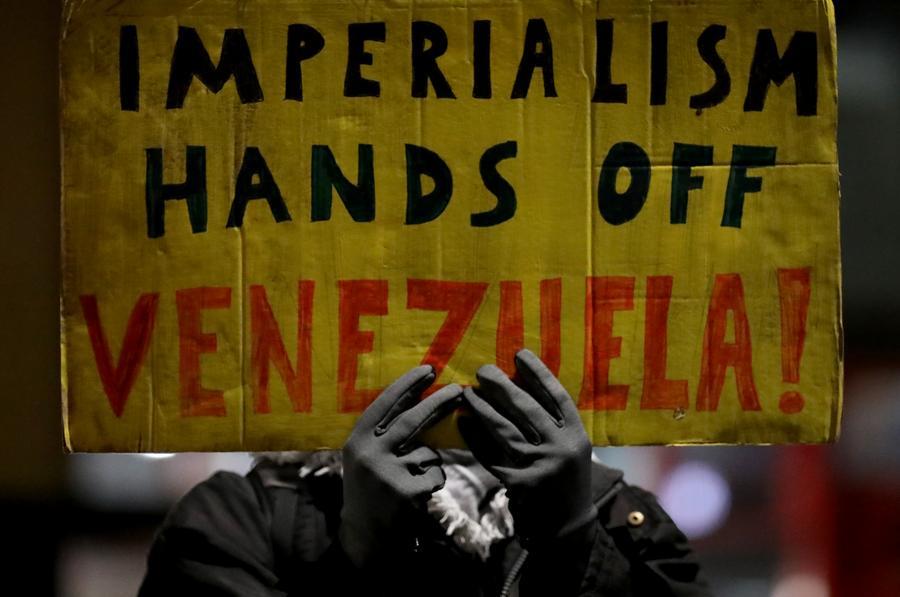
Celeste Kmiotek, a senior staff lawyer for the Strategic Litigation Project at the Atlantic Council, said that U.S. actions against Venezuela fall within the definition of “typical acts of aggression” as set out in UN General Assembly Resolution 3314.
Geoffrey Robertson KC, founding head of London-based Doughty Street Chambers and former president of the UN war crimes court in Sierra Leone, said the attack on Venezuela violated Article 2(4) of the UN Charter.
“The reality is that America is in breach of the United Nations charter,” he told The Guardian. “It has committed the crime of aggression, which the court at Nuremberg described as the supreme crime — the worst crime of all.”
TRAMPLING ON SOVEREIGNTY
The principle of sovereignty is a cornerstone of international relations and international law. The 1970 Declaration on Principles of International Law states that “the territorial integrity and political independence of the State are inviolable,” and “each State has the duty to comply fully and in good faith with its international obligations and to live in peace with other States.”
The U.S. seizure of a foreign head of state and its claim that it would “run” another country undoubtedly constitute a crude trampling of Venezuela’s sovereignty and a blatant interference in its internal affairs.
Claire Finkelstein, a professor of law at the University of Pennsylvania, described the U.S. attacks as an “illegal use of force” and “a violation of Venezuelan sovereignty.”
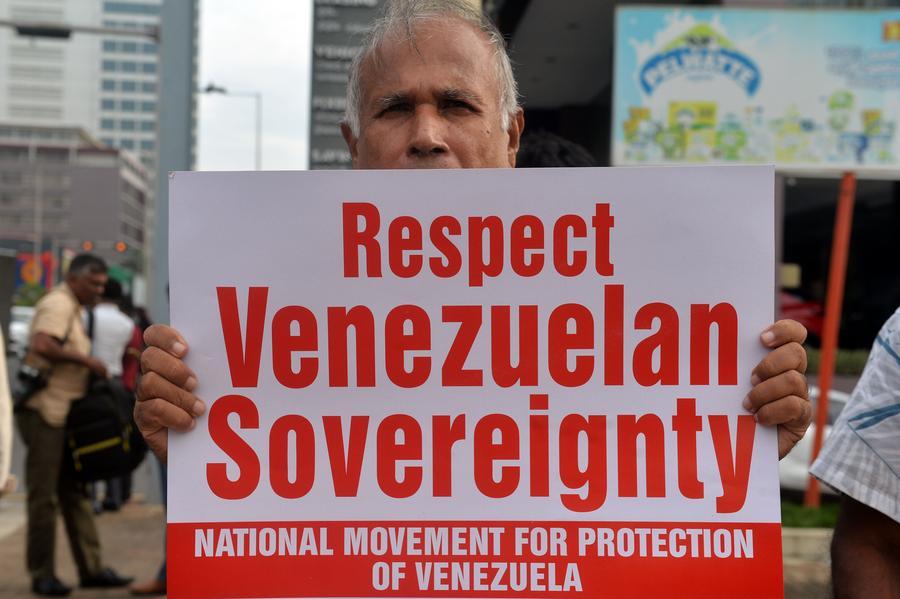
The expert said Trump’s idea of the United States “running” Venezuela was plainly illegal. “States have sovereignty rights, and you cannot just invade them and take them over,” she said in an interview with Al Jazeera.
VIOLATING IMMUNITY OF A FOREIGN HEAD OF STATE
Under the pretext of “counter-narcotics,” the U.S. government deployed troops to Venezuela, captured its president, and compelled him to appear before a U.S. court. This action exemplifies a hegemonic practice of placing domestic laws above international law.
Spain’s El Independiente said that the U.S. actions constituted “kidnapping” under international law and unlawfully deprived a head of state who enjoys immunity of his personal liberty.
Kmiotek of the Atlantic Council pointed out that international law affords Maduro full immunity as a sitting head of state under domestic courts, including in the United States.
PLUNDERING OTHER COUNTRY’S OIL RESOURCES
Trump said he would allow major U.S. oil companies to enter Venezuela while announcing that the United States’ embargo on all Venezuelan oil would remain in force. This move reveals the U.S. attempt to fully control and monopolize Venezuela’s oil extraction and exports, which is tantamount to outright robbery.
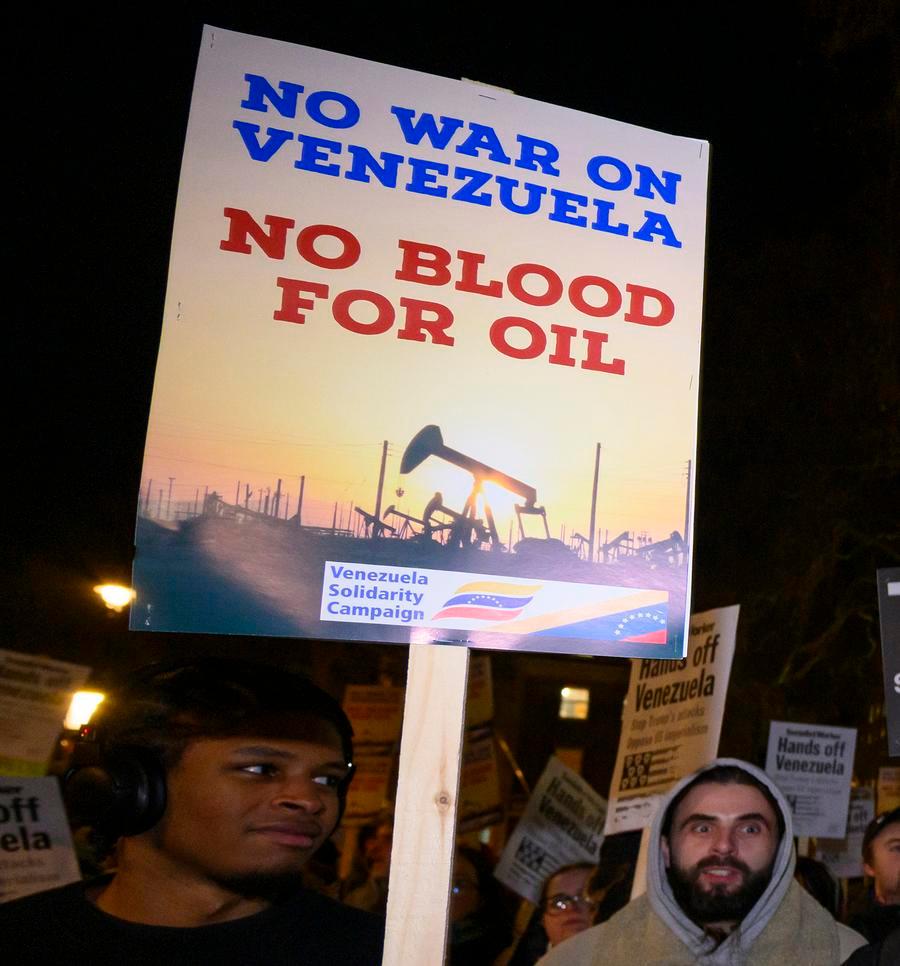
The Guardian reported last month that U.S. policy toward Venezuela has combined security pretexts, regime-change rhetoric and oil interests, reflecting its long-standing doctrine of “resource imperialism.”
TRIGGERING POLITICAL TURMOIL, DISRUPTING PEOPLE’S LIVELIHOODS
Trump claimed that U.S. actions would “make the Venezuelan people prosperous, independent, and secure.” However, violations of other country’s sovereignty constitute a serious infringement of the rights of its people, and U.S. military action would lead to political instability in Venezuela and deal a heavy blow to public welfare and people’s livelihoods.
Ertharin Cousin, a distinguished fellow on Global Food and Agriculture at the Chicago Council on Global Affairs, said that U.S. interventions in countries such as Iraq and Libya have already shown that external military involvement created security vacuums and heightened risks of violence, leading to the collapse of public order and the breakdown of basic services.
U.S. military action could push Venezuela toward food insecurity and a humanitarian crisis, far from delivering the so-called “prosperity” and “security,” said Cousin.
ENDANGERING REGIONAL PEACE, SECURITY
Following the U.S. military raid on Venezuela, Trump said that “Cuba is going to be something we’ll end up talking about” and warned Colombian President Gustavo Petro to be careful. Such bellicose and domineering actions have left many Latin American countries feeling that their own security is at stake.
Chile’s President Gabriel Boric strongly condemned the U.S. military aggression on Venezuela, stating “Today it’s Venezuela, tomorrow it could be any other.”
Celso Amorim, chief advisor to Brazilian President Luiz Inacio Lula da Silva, said in a recent interview that “the most serious thing to me is that this return to interventionism isn’t even disguised.”
“Thinking as a region, this is scary in a way I haven’t seen for a long time,” he said.■


