
“Tehran believes the United States often uses negotiations as a tool to manage conflict rather than genuinely resolve it. Any military escalation reinforces Iranian concerns that Washington could once again violate or withdraw from future agreements, as it previously did with the nuclear deal,” al-Dajani said.
CAIRO, May 27 (Xinhua) — Although a ceasefire is in place, U.S. forces struck targets in southern Iran on Monday, raising concerns that the already fragile trust between the two sides could be further eroded and complicate the peace negotiations.
“FLAGRANT VIOLATION” OF CEASEFIRE
The U.S. military struck missile launch sites and mine-laying boats in southern Iran on Monday in self-defense while using restraint during the ongoing ceasefire, said Tim Hawkins, spokesperson for the U.S. Central Command (CENTCOM).
However, Iran’s Foreign Ministry on Tuesday accused the United States of a “flagrant violation” of a ceasefire reached between the two countries on April 8.
Iran’s Islamic Revolution Guard Corps (IRGC) said on the same day that its air defense forces shot down an MQ-9 Reaper drone in the country’s airspace.
In a statement posted on its official news outlet Sepah News, the IRGC warned that it reserves the “legitimate and definitive” right to respond to any violation of the ceasefire by the “aggressive” U.S. army.
This is not the first time that strikes were carried out amid the ceasefire.
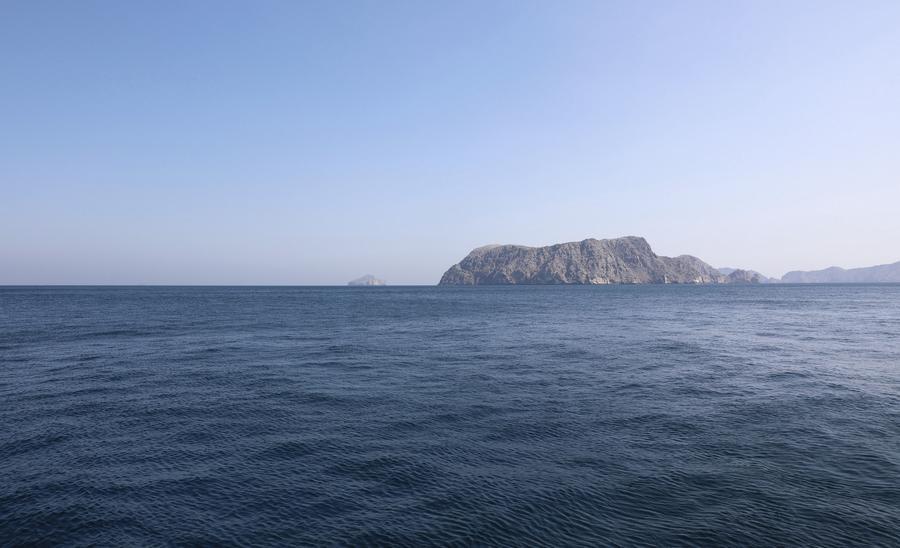
Iran’s main military command, Khatam al-Anbiya Central Headquarters, said on May 7 that the U.S. army attacked two Iranian vessels near the Strait of Hormuz and concurrently carried out airstrikes on civilian areas in southern Iran in cooperation with some regional states.
Iran’s armed forces immediately retaliated by attacking U.S. military vessels east of the Strait of Hormuz and south of Iran’s Chabahar port, causing significant damage, the Headquarters said.
CENTCOM said in a statement that U.S. forces intercepted “unprovoked Iranian attacks” and responded with self-defense strikes as their Navy ships passed through the Strait of Hormuz.
DEEPENING DISTRUST
The latest U.S. strikes against Iran serve as a testament that Iran’s “deep” distrust of the U.S. government is based on a logical and “profound” understanding of its “criminal and spiteful” nature and conduct towards the Iranian people, said the Iranian Foreign Ministry.
“The U.S. strikes against Iranian targets during a period of de-escalation demonstrate that Washington prioritizes its strategic and military interests over regional stability,” Ahmed Rafiq Awad, a Palestinian political analyst, told Xinhua.
“Washington claims it is protecting international navigation, but in reality, it uses this issue to justify its heavy military presence and expand its influence in the region. These attacks expose American double standards, as the United States calls on others to exercise restraint while quickly resorting to military force itself,” Awad said.
Experts have warned that the sporadic clashes risk undermining the negotiations.
“These attacks will negatively affect the ongoing peace talks because they deepen Iran’s distrust toward Washington,” Hussam al-Dajani, another Palestinian political analyst, told Xinhua.
“Tehran believes the United States often uses negotiations as a tool to manage conflict rather than genuinely resolve it. Any military escalation reinforces Iranian concerns that Washington could once again violate or withdraw from future agreements, as it previously did with the nuclear deal,” al-Dajani said.
FRAGILE FUTURE
The U.S.-Iran negotiations are still underway, with analysis indicating that fundamental points of disagreement remain unresolved, including the uranium enrichment issue and the future of the Strait of Hormuz.
U.S. President Donald Trump said Monday that Iran’s enriched uranium will be destroyed after being handed over to the United States, in place, or at another “acceptable location.”
On the same day, Iran’s semi-official Tasnim news agency reported that Tehran had not agreed to transfer enriched uranium abroad, rejecting a report by Saudi-based Al Hadath news channel claiming that “Iran is prepared to remove its highly enriched uranium from its territory.”
Regarding the Strait of Hormuz, discussions between Iran and the United States have not entered into details, Iran’s Foreign Ministry spokesperson Esmaeil Baghaei said on Monday, adding that the strait’s management method is an issue pertaining to coastal states.
“The future of the negotiations remains uncertain because the real crisis between the two sides is the deep lack of trust in American policy,” al-Dajani said.
“Washington seeks an agreement that would limit Iran’s regional influence while keeping Tehran under economic, political, and military pressure. Iran, meanwhile, wants genuine guarantees that the United States will not repeat its previous policies of sanctions, pressure, and abandoning agreements,” he added.
“As long as the United States continues to rely on pressure and dictates instead of equal partnership, reaching a stable agreement will remain difficult,” the expert said.■
Explainer: How will U.S. military attacks impact peace talks with Iran?


