
Critics have compared the offensive against Venezuela to the Iraq war, citing a familiar mix of regime-change rhetoric and security pretexts, whose fundamental aim is to serve Washington’s oil interests.
BEIJING, Dec. 26 (Xinhua) — Since late August, the United States has ramped up military presence in the Caribbean off Venezuela’s coast, alongside escalating sanctions, blockades and military threats against the oil-rich South American nation.
In a notable development, the White House has ordered the U.S. military to focus almost exclusively on enforcing a “quarantine” of Venezuelan oil for at least the next two months, Reuters reported on Wednesday, citing a U.S. official.
What are the true motives behind these actions? What outcome does Washington really want?
DRUG-TRAFFICKING CLAIMS
Since September, the U.S. military has launched dozens of strikes on vessels in the Caribbean Sea and Pacific Ocean, which were allegedly carrying drugs.
The strikes, whose legality has been questioned by experts and even U.S. lawmakers from both parties, have killed more than 100 people, according to figures released by the U.S. administration.
However, Washington justified the deadly operations as its “war on drug cartels.”
Last week, U.S. President Donald Trump ordered a “full and total blockade” of all sanctioned tankers entering or leaving Venezuela, and Washington has already seized two Venezuelan oil tankers.
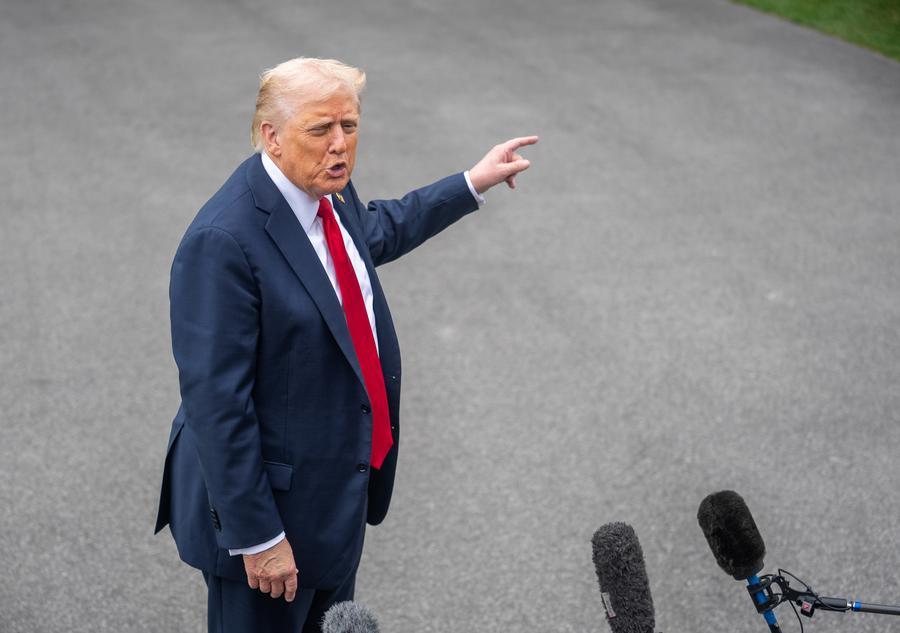
On Monday, Trump said the U.S. goal “probably would” be to force Venezuelan President Nicolas Maduro from power, and he thinks “it would be smart” for Maduro to step down.
TRUE MOTIVE
Critics, including lawmakers in the U.S. Capitol, have questioned whether counternarcotics is indeed the only U.S. motive.
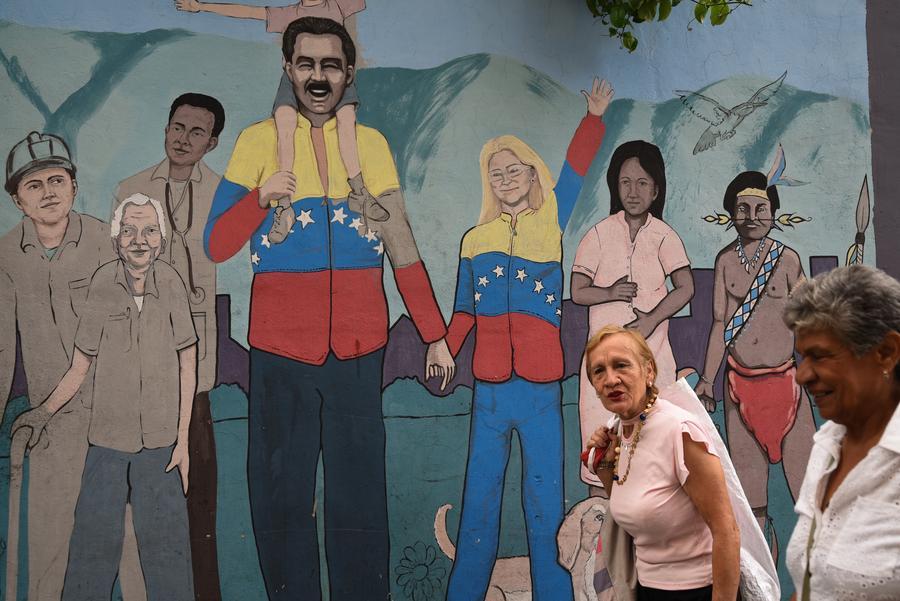
At a Tuesday emergency meeting of the UN Security Council convened over the situation in Venezuela, Venezuela’s ambassador to the United Nations, Samuel Moncada Acosta, accused Washington of committing the “greatest extortion” against his country.
Venezuelan Defense Minister Vladimir Padrino Lopez told a press conference last week that Trump “has said that we are the thieves of the oil that lies beneath our soil. That is completely incoherent.”
The truth was exposed to the international community, as it became clear that the escalating pressure and hostility against Venezuela are motivated by the U.S. intention to seize Venezuelan oil, the official added.
Venezuela was estimated to have about 303 billion barrels of oil in 2023, the world’s largest proven crude oil reserves, accounting for roughly 17 percent of global reserves, according to the U.S. Energy Information Administration.
Trump said on Monday that oil seized from Venezuela could be treated as a U.S. asset. “Maybe we will sell it, maybe we will keep it,” he told reporters. “Maybe we’ll use it in the strategic reserves. We’re keeping the ships also.”
The remarks echo earlier statements from Trump where he has repeatedly called for the United States to seize oil from other countries, indicating a broader belief that U.S. power entitles it to control or extract resources from other states, according to a Wednesday report of British newspaper The Guardian.
“RESOURCE IMPERIALISM”
Trump’s claims to Venezuelan oil are part of broader “resource imperialism,” an expert said in an analysis piece in The Guardian.
The U.S. administration’s global energy policy “is mostly about using the threat of violence or the withholding of aid” to secure the inputs for its energy strategy, said Patrick Bigger, co-director of Transition Security Project, a research initiative focused on the climate and geopolitical concerns of militarization.
Critics have compared the offensive against Venezuela to the Iraq war, citing a familiar mix of regime-change rhetoric and security pretexts, whose fundamental aim is to serve Washington’s oil interests.
A 2023 article titled “Iraq wars and the American economy,” archived in the EBSCO database — a major U.S. information services provider — said: “Since World War II, U.S. foreign policy has prioritized securing oil from the Persian Gulf, with Iraq playing a critical role due to its substantial oil reserves.”
In 2003, the United States launched a military invasion of Iraq under the pretext that it possessed weapons of mass destruction. The war left hundreds of thousands of people dead and almost 10 million displaced.
Following the “conflict,” “significant American business opportunities arose, notably through contracts with oil companies to exploit Iraqi oil fields,” the article wrote.
During his first presidential campaign, Trump argued that though the United States should not have launched the Iraq war, it should have taken Iraq’s oil to compensate for the U.S. military spending.
“You win the war and you take it,” he told ABC in 2015. “You’re not stealing anything … We’re reimbursing ourselves.”■


