
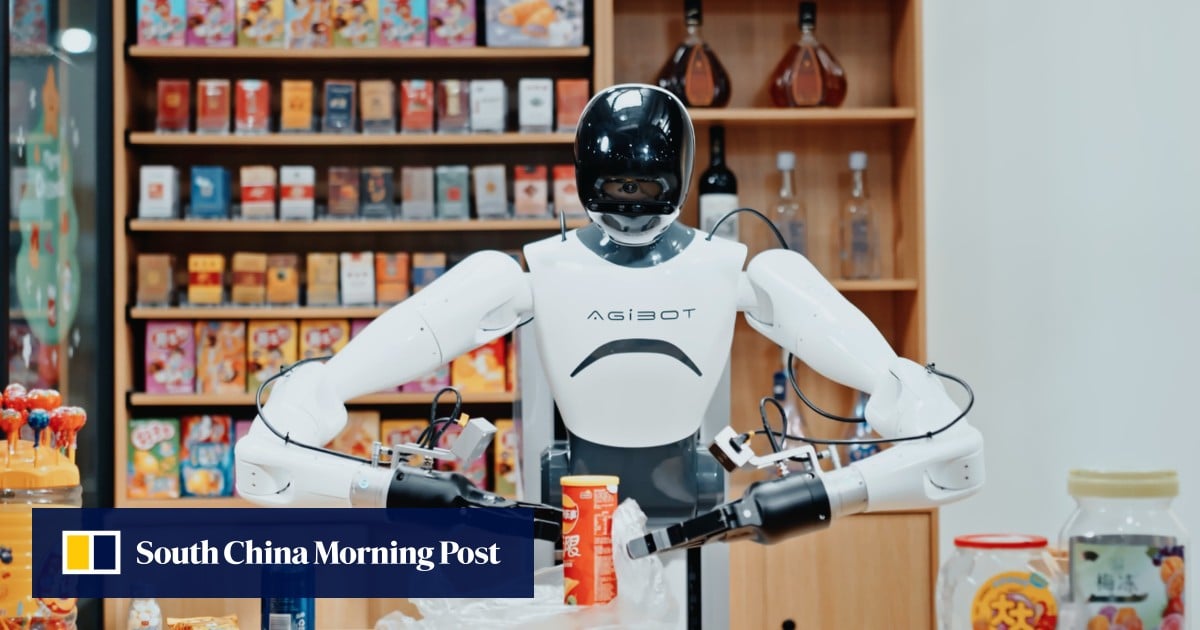
A desk with a laptop and a stack of books. A shirt waiting to be folded. A kitchen counter, a milk-tea stand and pile of building blocks – all in a single room. Robots of different shapes face their tasks with focus, controlled by a human operator.
Pick up. Place. Fold. Repeat.
This is not a film set, it is a data collection factory for embodied intelligence – a de facto “data foundry”.
Advertisement
This non-mainstream monetisation offers a glimpse into how robotics companies – among the most heavily funded and policy-backed sectors in recent years – are scrambling to diversify revenue streams, from hardware sales and data services to leasing and enterprise solutions.
Advertisement
The technology is no longer the biggest uncertainty, the business model is.
“2026 will be a critical year as humanoid integrators strive to reach commercialisation and build up their ecosystems,” head of China industrials research at Morgan Stanley Zhong Sheng, said, warning of an impending shake-out.
Hype or real: China’s robot boom faces reality check as commercialisation lags


