
“When politicians are more focused on denying the opposition party a victory than they are on improving Americans’ lives, the people who lose are everyday Americans,” said former U.S. Senator Kyrsten Sinema.
WASHINGTON, July 8 (Xinhua) — As the 2026 U.S. midterm primaries get underway, candidates are vying for their parties’ nominees by promising solutions to some of America’s biggest challenges.
For many voters, however, those promises sound strikingly familiar. Election after election, Americans head to the polls hoping for better lives, higher wages and safer streets. Yet time and again, the promises fall short once the ballots are counted.
Call it a politics of “you vote, I don’t deliver,” a pattern that extends from Washington to city halls across the country. Why do politicians keep winning with failed promises?
ONE FOR THE MONEY
While American voters may cast their ballots in pursuit of a better life, the electoral machinery remains invariably beholden to big money.
In the 1890s, former U.S. senator Mark Hanna said: “There are two things that are important in politics. The first is money, and I can’t remember what the second one is.”
U.S. elections have become extraordinarily expensive. The 2024 election alone cost about 15.9 billion U.S. dollars, according to OpenSecrets, roughly equivalent to paying more than 200,000 public school teachers for a year.
Much of this money comes from a tiny share of the population. After 2010, the share of total contributions coming from the top 1 percent of donors rose from about 7.4 percent to 20.1 percent, according to research from Erasmus University in the Netherlands.
Access tends to follow money. Once elected, politicians often maintain closer ties with major donors and lobbyists than with ordinary constituents.
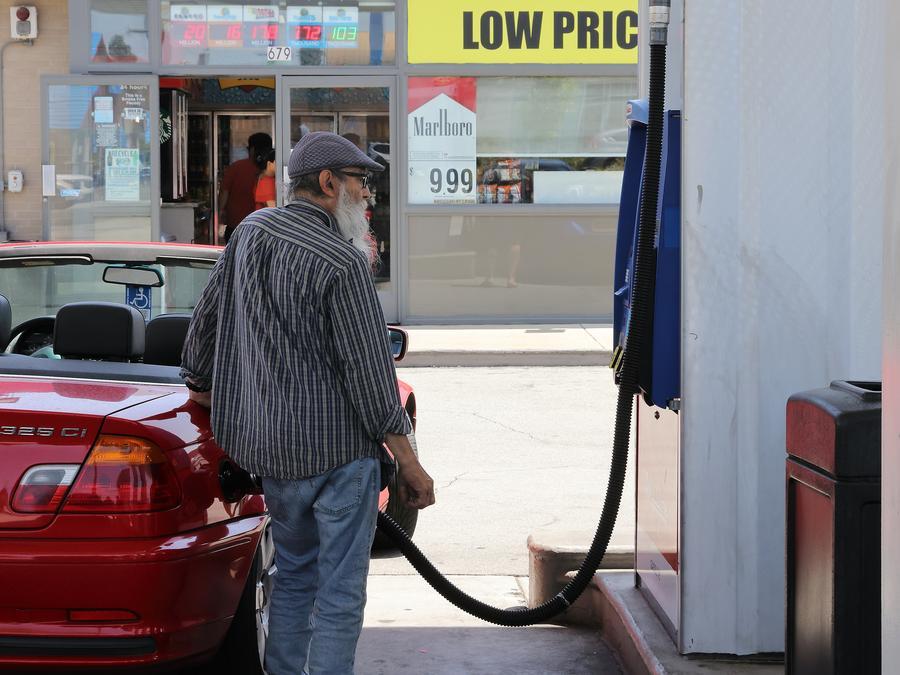
Yet while campaign spending continues to soar, the cost-of-living crisis has left ordinary people feeling financially squeezed.
“By the time you pay for groceries, that’s your whole work week of pay gone,” Nick Marsh, a manager at a restaurant in Atlanta, the capital of Georgia, said to Bloomberg.
As campaign spending breaks records and household budgets tighten, U.S. elections continue to reward the politics of promise over the politics of delivery.

REWARDING EMPTY PROMISES
Every election is, in part, a competition to convince voters that the status quo is unacceptable and only one candidate can fix it.
Researchers from Washington University have noted that overpromising is “a common practice across the political spectrum and at every level of government.”
“The political campaign is not a discussion of alternative policies… It is a highly ritualistic and dramatic performance,” said Murray Edelman, professor of political science at the University of Illinois.
Proposals such as “Medicare for All” became powerful campaign messages despite having little prospect of passing Congress. Similar dynamics could be seen in Trump’s promises to end the Ukraine conflict “on day one” and New York Mayor Zohran Mamdani’s promise of free bus service.
Repeated cycles of grand promises and limited results have contributed to political exhaustion. John, a 29-year-old financial professional from Pennsylvania, said that he didn’t vote in the 2024 presidential election.
“What is the point (of voting)? Aside from a handful of weaponized issues, the parties are nearly identical. They both hate the poor and serve only their donors,” John told the Guardian.
As moderates disengage, politics rewards spectacle over results. Broken promises are no longer automatically punished. Increasingly, they are filtered through partisan identity before they reach the ballot box.
WHO NEEDS RESULTS?
The paradox is striking: The less likely ambitious promises are to be delivered, the more passionately many voters defend the politicians making them. In an era of deep partisan polarization, elections have become as much a contest over identity as over policy.
Experts describe this shift as affective polarization — a form of division driven less by policy disagreements than by emotional attachment to one’s own political camp and growing distrust of the other.
“In essence, we’re acting more like fans of a football team going to a game than a banker carefully choosing investments,” said Lilliana Mason, professor of political science at Johns Hopkins University.
Eitan Hersh, professor of political science at Tufts University, argues that “political hobbyism” is on the rise, with citizens consuming politics much like sports or entertainment rather than as a means of influencing public policy.
“In shortcut politics, in hobbyism, emotion is the goal,” Hersh said.
As politics grows more complex, many voters increasingly rely on trusted partisan cues instead of independently evaluating competing proposals.
“It’s easier for voters to turn to trusted political elites to condense the information for them,” said Dona-Gene Barton, an associate professor at the University of Nebraska-Lincoln, in an interview with the HuffPost.
Negative campaigning has reinforced that trend. Instead of persuading undecided voters, campaigns increasingly seek to mobilize supporters by emphasizing the dangers posed by the opposing party.
Former U.S. Senator Kyrsten Sinema aptly summarized the dilemma. “When politicians are more focused on denying the opposition party a victory than they are on improving Americans’ lives, the people who lose are everyday Americans.”■
Xinhua Headlines: Why do Americans keep electing politicians who fail to deliver?


